In the ever-evolving world of Warframe, few in-game items hold as much mystique, potential, and trading power as Riven Mods. These unique, tradeable mods, with their completely randomized stats, create a dynamic and often lucrative market. No two Rivens are ever identical, even for the same weapon, making each one a potential treasure or a curious oddity. This inherent randomness is precisely why trading top-tier Rivens stands as one of the most profitable activities for earning Platinum. Yet, for many players, navigating the complex factors that determine a Riven's value can feel like deciphering an alien language. From weapon popularity to the surprising value of negative stats, understanding how to price these mods fairly is a crucial skill for any Tenno looking to thrive in the game's economy.

The Foundational Factor: The Weapon Itself
The single most important element in pricing a Riven is the weapon it is designed for. Every weapon has a base market value, often referred to by traders as its "unrolled" price. This is the minimum price that any Riven for that specific weapon will typically sell for, completely regardless of its attributes. It represents the raw potential of the mod before any stats are considered.
For instance, as of 2025, an unrolled Riven for a popular weapon like the Burston can easily command 200 Platinum or more. Conversely, a Riven for a weapon with little to no demand might struggle to sell for more than 10-20 Platinum, even if it boasts seemingly impressive stats. This highlights a critical truth: a so-called "god-roll" on an unpopular weapon is often worth far less than a mediocre roll on a meta weapon.
Understanding Riven Disposition: The Secret Multiplier
Directly tied to weapon popularity is the concept of Riven Disposition. This is a dynamic stat multiplier that is adjusted by Digital Extremes based on a weapon's usage statistics, strength, and popularity within the community, particularly among high Mastery Rank players. Why does this matter? It directly controls the potential range of attribute values a Riven can roll for that weapon.
In-game, disposition is displayed as a row of five dots next to a weapon's stats:
-
⬤⬤⬤⬤ High Disposition: Weapons that are less popular or weaker. Rivens for these can roll with the strongest possible attribute values, making them incredibly potent.
-
○○○○ Low Disposition: Meta, popular, or powerful weapons. Rivens for these have severely limited attribute values to prevent them from becoming overwhelmingly broken.
This system is regularly updated, meaning a weapon's disposition—and thus the value of its Rivens—can shift with each major update or Prime Access release. A savvy trader always checks the current disposition.
Deciphering the Stats: Positives, Negatives, and Mastery
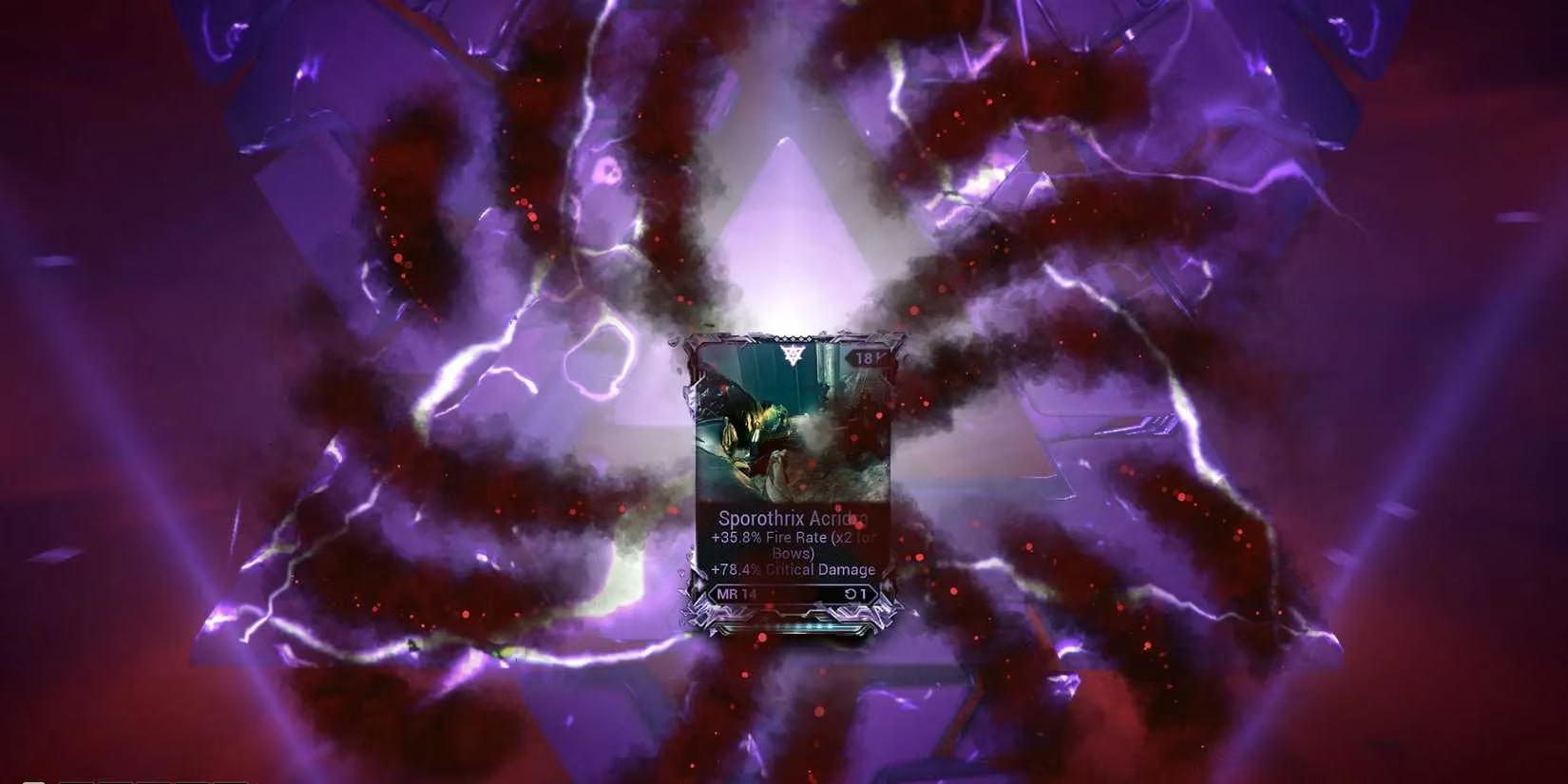
Once you've identified the weapon and its disposition, the next step is a deep dive into the Riven's attributes. A Riven can have up to three positive stats and one negative stat. Here's where things get interesting: a negative attribute is not always a bad thing. In fact, a harmless negative stat actually increases the magnitude of the positive stats, often making the Riven more valuable. This trade-off is a key concept in Riven valuation.
Desirable Positive Stats (Vary by Weapon):
-
Critical-Based Weapons: +Critical Chance, +Critical Damage
-
Status-Based Weapons: +Status Chance, +Elemental Damage (Toxin, Heat, etc.)
-
Universal Desirables: +Multishot, +Damage, +Attack Speed/Fire Rate
Harmless Negatives (Can Increase Value):
-
-Zoom
-
-Recoil
-
-Impact/Puncture/Slash (if the weapon doesn't rely on that physical damage type)
-
-Damage to Factions (e.g., -Damage to Infested)
Deal-Breaker Negatives (Destroy Value):
-
-Damage
-
-Critical Chance/Critical Damage (on a crit weapon)
-
-Status Chance/Duration (on a status weapon)
-
-Multishot
For example, a Burston Riven with +Critical Damage and +Critical Chance might sell for 300 Platinum. However, if that same Riven also has a -Recoil or -Zoom negative, its value could jump to 400 Platinum or more due to the boosted positive stats.
Two other often-overlooked factors are the Mastery Rank requirement and the mod's polarity. A high MR lock (e.g., MR 16) significantly shrinks the pool of eligible buyers, which can suppress demand and price. While polarity doesn't directly affect price, a common polarity like Madurai (V) or Naramon (-) can make the mod sell faster, as it's easier for players to fit into their builds without spending a Forma.
The Art and Cost of Re-rolling
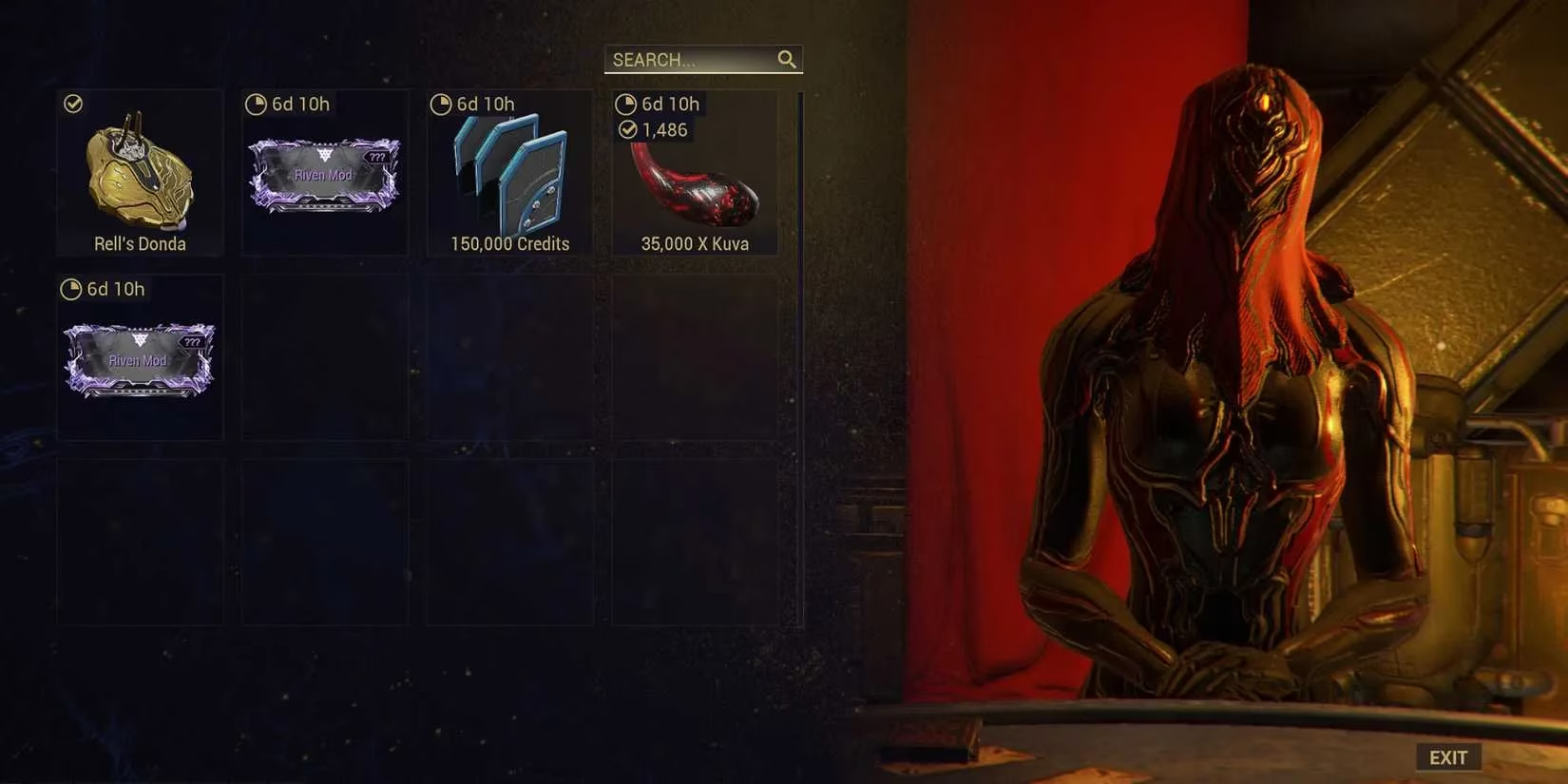
What if your Riven's stats are poor? You can re-roll them using Kuva, a special resource obtained from Kuva Siphon/Flood missions or certain vendors. However, this is a gamble. Each re-roll costs more Kuva than the last, eventually capping at a steep 3,500 Kuva per roll. After a roll, you choose between the new set of stats and the old one. This decision is crucial; a wrong choice can destroy weeks of investment. Is it worth pouring hundreds of thousands of Kuva into chasing a perfect roll? For most players, the answer is no—this path can quickly lead to burnout and bankruptcy.
The Myth and Majesty of the "God-Roll"
The term "god-roll" or "g-roll" is reserved for Rivens with an exceptionally rare combination of attributes that perfectly synergize with a weapon's strongest build. There's no universal formula. A god-roll for a beam-status weapon like the Ignis Wraith (+Heat, +Toxin, +Status Chance, -Zoom) is entirely different from a god-roll for a sniper rifle like the Rubico Prime (+Critical Damage, +Critical Chance, +Multishot, -Zoom). The definition is set by community consensus for each weapon.
These legendary mods can sell for astronomical sums, typically between 3,000 and 10,000 Platinum. While they represent the pinnacle of Riven hunting, they are exceptionally rare. Chasing one is a high-stakes gamble that few win.
How to Research the Market Price
The final, essential step is market research. Never price your Riven in a vacuum. The best tool for this is the Warframe Market website, a trusted, fan-run third-party platform used by millions of players.
Here’s a simple research process:
-
Go to the Riven section of Warframe Market.
-
Select your specific weapon.
-
Use the filters to select up to three positive attributes and one negative attribute that match your Riven.
-
Analyze the listings. Look at the lowest prices for similar stats (to understand the floor) and the prices of sold listings (to understand what people are actually paying).
-
This comparison will give you a solid, evidence-based estimate for pricing your own Riven.
Essential Third-Party Tools for Traders
Given Warframe's complexity, several external tools have become indispensable for serious Riven traders:
| Tool Name | Type | Primary Use |
|---|---|---|
| Warframe Market | Website | The gold standard for checking live prices and listing items for sale. |
| AlecaFrame | Desktop App | Allows real-time stat and price comparison while re-rolling Rivens in-game. |
| Riven Market | Website | Functions as a dedicated auction house specifically for Riven Mods. |
| Riven Calculator | Web Tool | Helps evaluate potential stat ranges based on disposition for informed trading. |
Final Thoughts: Patience and Knowledge Pay
Pricing Riven Mods in Warframe is equal parts science and art. It requires understanding the foundational pillars—weapon demand, disposition, and stat synergy—and supplementing that knowledge with solid market research. Remember, a negative stat can be a hidden blessing, the perfect roll is defined by the weapon, and the market is always moving. By following this guide, you transform from a confused seller into a confident trader, ready to navigate one of Warframe's most rewarding economic systems. Will your next unveiling be a hidden gem waiting for its true value to be recognized?
Loading comments...