Five years after its grand unveiling at TennoCon 2021, the Nidus Prime Warframe and The New War expansion still resonate deeply within the Warframe community. Digital Extremes staged a showpiece event that July, pulling back the curtain on a new Prime variant and an ambitious narrative leap that would shape the game’s trajectory well into 2026. The reveals were not just product announcements—they were a declaration of design philosophy, like a master cellist abandoning sheet music to improvise a devastating new melody from the same familiar instrument.
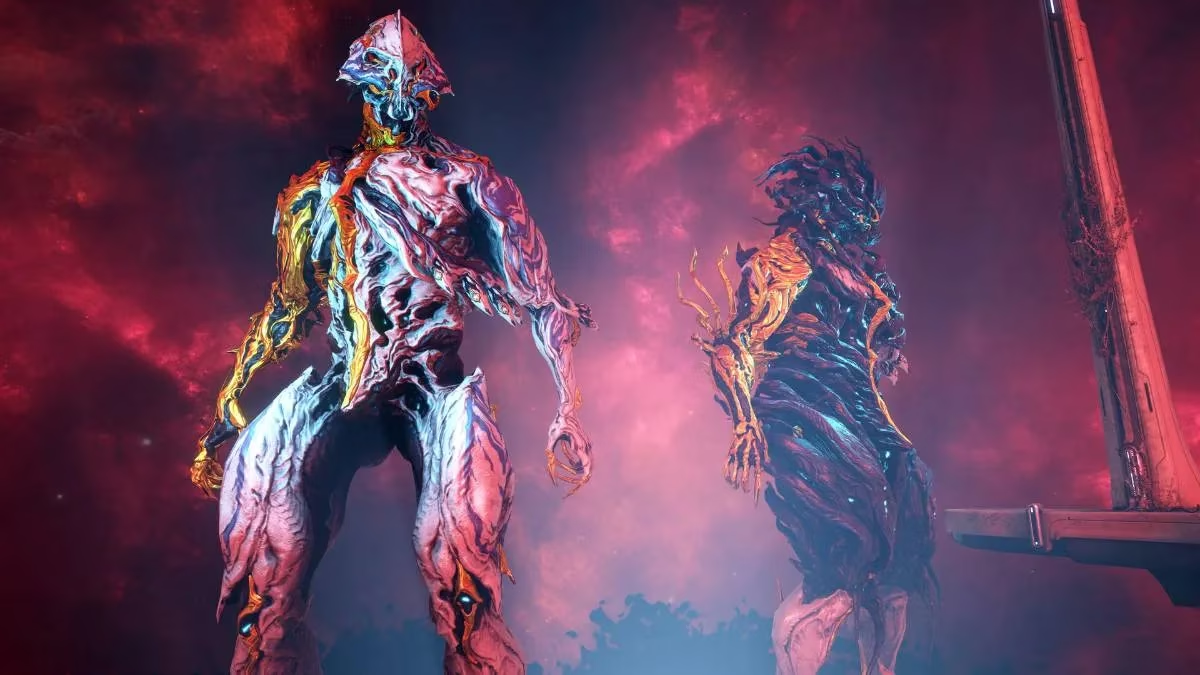
The star of the show was undoubtedly Nidus Prime. Every Warframe eventually receives a gilded Orokin makeover, but Nidus Prime arrived as something of an alchemical paradox: taking a raw, infestation-bloated berserker and encasing its horror in gold-plated elegance. The baseline Nidus had already carved out a niche as the game’s first true stacking Warframe, a living contagion that grew more terrifying as mutation stacks accumulated. It functioned like a relentless snowball rolling down a hill of tissue, gathering chaotic mass with every ability cast until it became borderline immortal. With the Prime version, that snowball became an avalanche wrapped in silk.
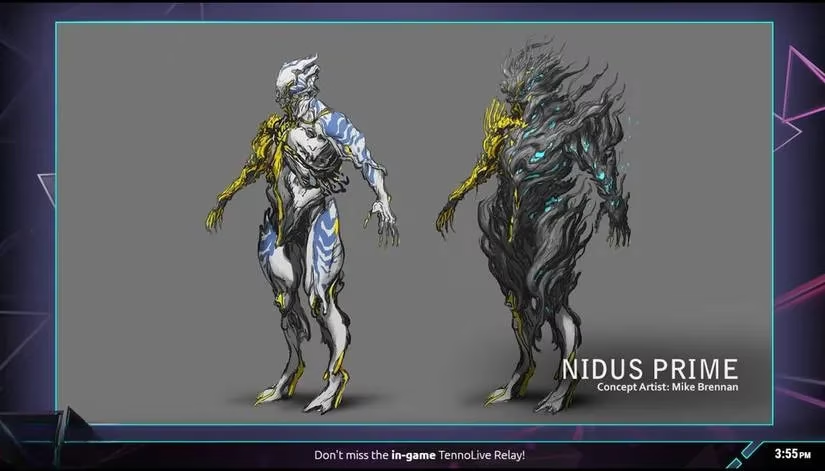
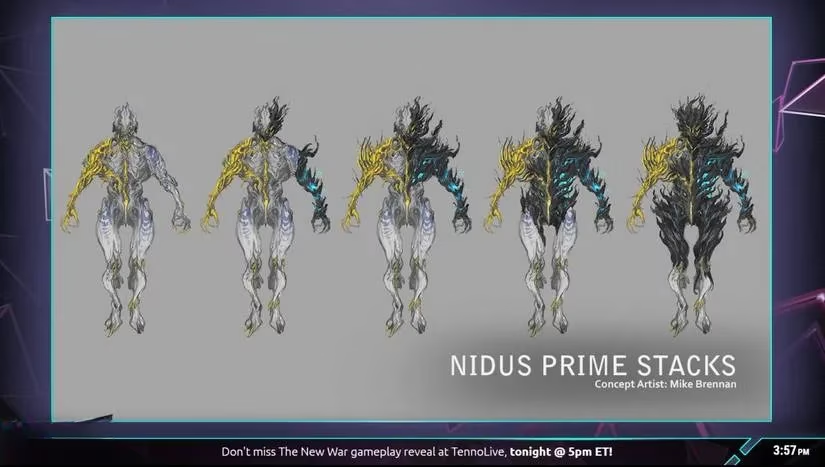
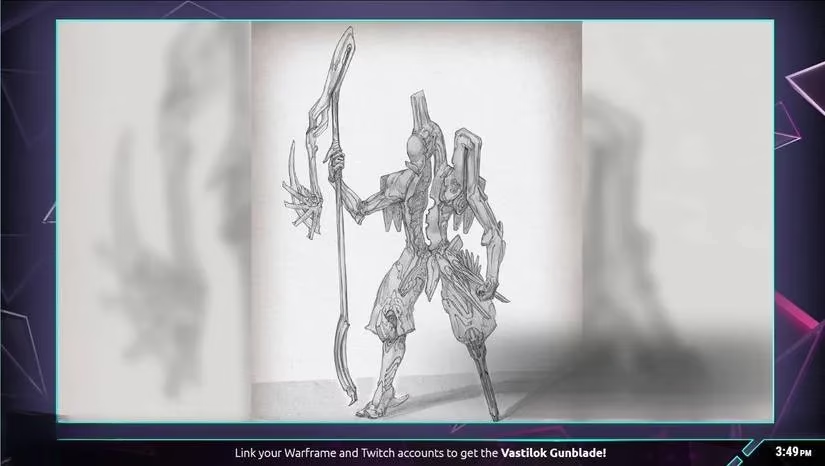
The design philosophy behind Nidus Prime was unlike anything seen in prior Prime releases. Where regular Nidus allowed the infestation to grow unchecked, erupting into fleshy tendrils and asymmetrical horror, the Orokin interpretation imposed a regal structure. It was as if the designers had injected a dose of renaissance sculpture into a virus, creating a creature that felt simultaneously sacred and profane. This visual dichotomy—controlled opulence barely containing explosive biological power—became an instant talking point. As the mutation counter rose, Nidus Prime evolved through distinct physical stages, each transition feeling like an aristocrat slowly losing composure at a gala, but turning that loss into a weapon.
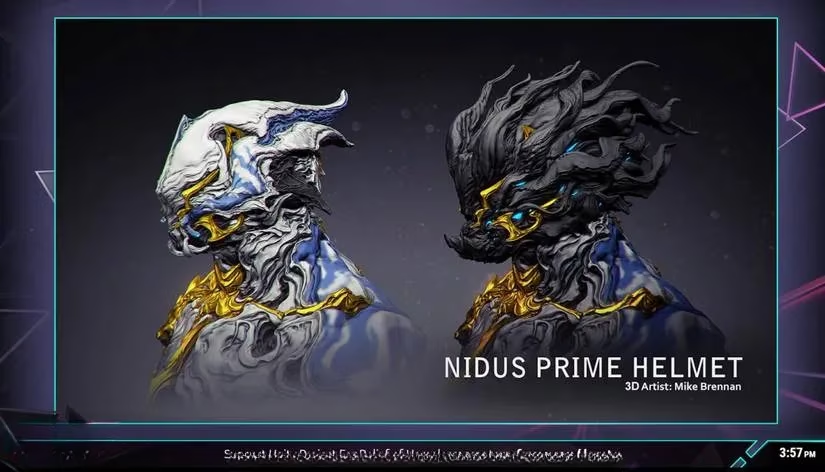
The helmet deserved its own spotlight. Its curved, almost angelic contours suggested a celestial parasite, complete with a central horn that seemed carved from congealed starlight. Artists committed to the bit entirely, delivering a piece of headgear that could sit comfortably in a museum dedicated to corrupted divinity. Fittingly, Nidus Prime entered the game later that summer through the next Prime Access, though Caliban, the sentient hybrid, was held back to debut alongside The New War.
Speaking of The New War, Digital Extremes dedicated over thirty minutes of gameplay to the expansion, signaling that this was more than a standard quest drop. The storyline introduced a revolutionary narrative device: playable characters outside the Tenno arsenal. Kahl-175, a Grineer grunt with a heart, Veso, a Corpus engineer caught in the machinery of war, and Teshin, the eternal swordsman, each offered fractured perspectives that stitched together a larger tapestry. This multi-protagonist approach felt like reading a novel where every chapter bleeds into the next through a different set of eyes, forcing players to perceive the conflict from the bottom up and the top down simultaneously.
The gameplay shown at TennoCon made it clear that The New War was not merely a mission pack; it was an existential remix. Players would inhabit bodies that were not their own, wielding skills that felt deliberately underpowered compared to their god-like Warframes. This created a tension that the community hadn’t experienced since The War Within. It was the storytelling equivalent of asking a master chef to cook with only a single knife and a burning stove—the limitations became the flavour.
Beyond the narrative, the event delivered infrastructure news that continues to define the game in 2026. Crossplay and cross-save functionality, first announced at TennoCon 2021, turned Warframe into a seamless multiplatform experience. Players on PC, PlayStation, Xbox, and even mobile could now share progress and squad up without friction. The mobile version, revealed on the same day, expanded the player base dramatically, transforming coffee shops and commuter trains into active battlefields. What was once a desktop-bound grind became a universal habit, proving that the future of live-service games hinges on platform fluidity.
Five years on, the TennoCon 2021 reveals stand as a pivotal moment. Nidus Prime remains a staple in endgame endurance runs, its stacking mechanic still functioning like a psychological feedback loop that rewards aggression with near-invulnerability. The New War cemented Digital Extremes’ reputation for narrative risk-taking, and the echoes of Kahl-175’s simple bravery or Veso’s desperate ingenuity still color newer questlines. The cross-platform leap has only deepened, making the concept of
Looking back, the event felt like a compressed genesis. A new Prime that reimagined infestation, a war that reimagined perspective, and a cross-platform handshake that reimagined community. Warframe never stands still, but the momentum that started at TennoCon 2021 pushed the game into a trajectory that, even in 2026, feels like a planet still discovering new orbits. The only constant is the infestation, ever-spreading, now wearing a crown of gold.
Loading comments...