As I reflect on the gaming landscape of 2026, I can't help but notice how The First Descendant continues to be a fascinating case study. When Nexon launched this free-to-play, cross-platform looter-shooter, it was immediately met with a wave of both excitement and skepticism. The game achieved remarkable player count milestones within its first weeks, proving there's a hungry audience for this genre. But here's the question we all asked: Is this just another Warframe clone, or does it have the potential to carve its own path? The answer, as I've observed over the past year, appears to be a complex mixture of both.
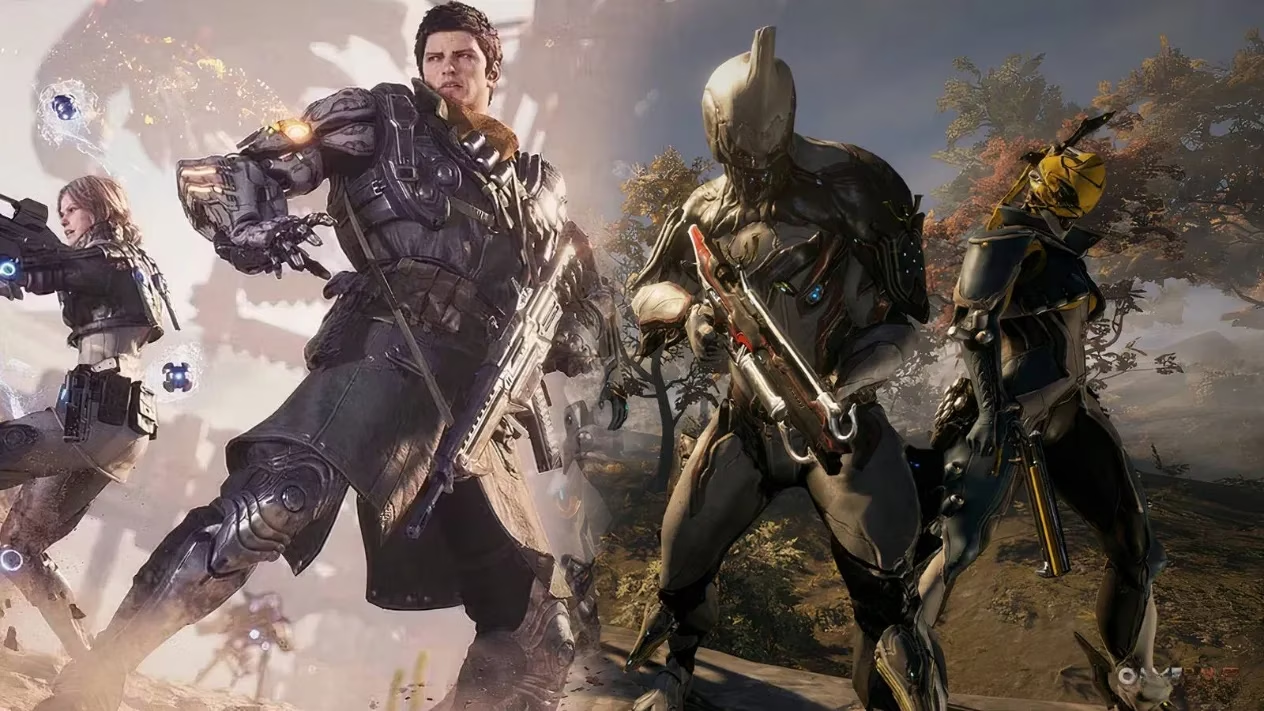
🔄 The Inevitable Comparisons: More Than Just Inspiration
Let me be frank—when you play The First Descendant, the Warframe and Destiny 2 influences aren't just subtle nods; they're foundational elements. The developers themselves admitted these games were "a big source of inspiration," and honestly, who can blame them? Both games share:
-
Third-person perspective with fluid movement systems
-
Hero-based gameplay with distinct character abilities
-
Mission structures that will feel immediately familiar to genre veterans
-
Looter-shooter mechanics where gear progression is king
But here's what makes The First Descendant stand out in 2026: it offered players something precious—a fresh start. In an era where live-service games can feel like part-time jobs with years of backlogged content, jumping into a new game with friends on different platforms felt liberating. The cross-platform functionality wasn't just a checkbox feature; it was the game's secret weapon.
💰 The Monetization Dilemma: Learning the Wrong Lessons?
Now, let's address the elephant in the room. If The First Descendant borrowed the best elements from Warframe, why did it also adopt some of the most controversial aspects? Specifically, I'm talking about the monetization practices that sparked immediate backlash.
Consider this table comparing their approaches:
| Feature | Warframe (2026) | The First Descendant (2026) |
|---|---|---|
| Base Game Price | Free | Free |
| Endgame Accessibility | Mixed (F2P possible but grindy) | Following similar pattern |
| Trading System | Established | Recently implemented with limitations |
| Progression Shortcuts | Available via premium currency | Available via premium currency |
| Community Sentiment | Accepted (after years of adjustment) | Controversial (still developing) |
What troubles me most is how quickly The First Descendant established what players are calling "soft paywalls." While technically, all content is accessible without spending money, the reality is different. Certain endgame activities and meta weapons require such extensive grinding that the line between "free-to-play" and "pay-to-progress" becomes dangerously blurred.
🎯 The Endgame Experience: Accessibility vs. Monetization
As someone who's played both games extensively, I've witnessed firsthand how Warframe's endgame evolved. Initially criticized for similar practices, Digital Extremes gradually adjusted based on community feedback. The question is: Will The First Descendant follow this learning curve, or will it double down on monetization?
Here's what we know about the current state (2026):
-
Trading System Implementation: Recently added, but with significant restrictions that limit its effectiveness in mitigating grind
-
Event Structures: Time-limited events often feature premium currency rewards at unreachable tiers for casual players
-
Gear Acquisition: Meta weapons require components with drop rates that feel designed to encourage premium purchases
Isn't it ironic? The very inspiration that could make The First Descendant great—Warframe's successful live-service model—might also be its downfall if monetization isn't handled with more care.
🔮 Looking Forward: Can The First Descendant Find Its Own Path?
As we move further into 2026, The First Descendant stands at a crossroads. The game has proven it can attract and retain players, but the long-term sustainability depends on addressing several key issues:
-
Community Trust: How will Nexon respond to ongoing monetization concerns?
-
Content Pipeline: Can they deliver meaningful updates without exacerbating pay-to-progress concerns?
-
Identity Formation: When will the game stop being "Warframe-like" and become truly distinctive?
What gives me hope is that live-service games are living entities. Warframe wasn't perfect at launch either, but it evolved through player feedback and developer responsiveness. The same opportunity exists for The First Descendant, but the window for making crucial adjustments is narrowing.
🤔 Final Thoughts: A Cautionary Tale in the Making?
Reflecting on my experience with The First Descendant, I'm left with mixed emotions. On one hand, it's exciting to see a new contender in the looter-shooter space, especially one with such polished mechanics and cross-platform appeal. On the other hand, the monetization approach feels like a step backward for the genre.
Perhaps the most telling comparison isn't between The First Descendant and Warframe, but between player expectations in 2026 versus a decade ago. Gamers today are more savvy about monetization tactics, more vocal about their concerns, and quicker to abandon games that feel predatory. This isn't 2016 anymore—the standards have evolved.
Will The First Descendant adapt to these new standards, or will it become a cautionary tale about what happens when inspiration turns into imitation of the wrong elements? Only time will tell, but as someone who genuinely wants to see this game succeed, I hope Nexon listens more carefully to what players are saying about the balance between fair monetization and rewarding gameplay.
After all, isn't the true test of any live-service game not how many players it attracts initially, but how many it retains through fair treatment and engaging content? The First Descendant has shown it can do the former—now we wait to see if it can achieve the latter.
Loading comments...