The long-awaited Angels of the Zariman update for Warframe landed in April 2022, marking one of the most substantial content drops since The New War. This update serves as a direct narrative sequel, launching players into a fresh questline set aboard the haunting Zariman Ten Zero. Alongside the story expansion, Digital Extremes introduced a brand-new Warframe, sweeping quality-of-life improvements, and an ambitious series of performance optimizations that continue to benefit players even as the game evolves into 2026.
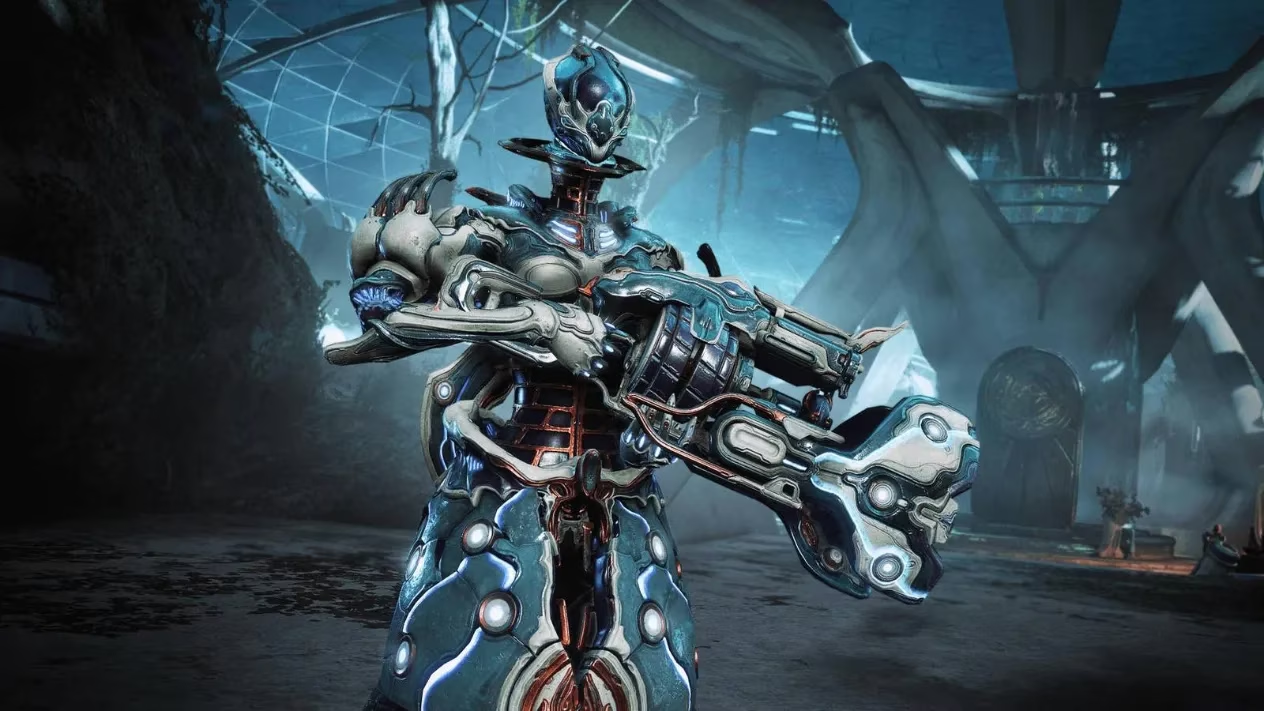
A centrepiece of the update is the debut of Gyre, an electricity-themed Warframe whose abilities cascade through crowds of enemies with chain‑lightning precision. Her arrival was accompanied by the ethereal Chrysalith social hub—a new post‑quest node that opened the door to three fresh mission types: Void Flood, Void Cascade, and Void Armageddon. Each mode injected variety into the core loop while rewarding players with new Arcanes, Incarnon weapons, and Zariman‑themed cosmetics. The update also expanded Operator and Drifter customization with additional hair and facial options, deepening the personalisation that veteran Tenno had requested for years.
User interface changes proved to be equally impactful. The Options menu received a visual overhaul, and the Resource Extractor selection pop‑up was redesigned to adopt the current UI theme. A welcome convenience came in the Arsenal: when previewing or selecting gear, item descriptions became permanently visible in the top‑right corner. The mission countdown timer was repositioned to sit in front of vote buttons, preventing accidental squad disbanding. Meanwhile, the in‑game Market gained the ability to preview bundled UI themes, backgrounds, and sounds, and an experimental recommendation system began suggesting items dynamically—a feature that has matured significantly by 2026.
Performance took a giant leap forward. Digital Extremes worked closely with engine optimizations, reporting that DirectX 12 mode now ran up to 25% faster on high‑end systems. Scenes that previously rendered at 110 FPS in DirectX 11 under The New War were pushing 141 FPS in DirectX 12, and inside the Angels of the Zariman tile set the same scene soared to 177 FPS. These gains were backed by systemic memory‑footprint reductions, texture streaming improvements, and spot‑load optimizations that virtually eliminated the jarring end‑of‑mission hitches when owning a Necramech without the summon gear equipped. Dedicated fixes also addressed GPU performance drops caused by Malice’s Magnetize ability and crashes triggered by toggling enhanced graphics with DirectX 12.
The Plains of Eidolon received a major overhaul to the Thumper mini‑boss. Thumpers now turned more slowly, their ground‑thump attack spaced out shockwaves more generously, and cannon attacks prioritised ranged targets more intelligently. A burn projector visual was added to legs once a weak point was destroyed, giving clear feedback during combat. Post‑New War Thumpers also adopted quest‑specific detailing during certain bounties, reinforcing the evolving open‑world continuity.
A torrent of smaller tweaks refined the Warframe experience across the board. Arcane descriptions now explicitly state what they can be equipped on. Dojo decoration screens gained a 3D preview and now display the number of unfunded decorations of the same type. The long‑requested ability to zoom in and out of a Warframe while customizing appearance arrived, and a confirmation prompt was added to the Arsenal’s “Randomize” button. Several Warframe abilities were updated to affect allied NPCs—Nova’s Portal, Wisp’s Reservoirs, Volt’s Speed, and Zephyr’s Jet Stream Augment now all assist Kavor Defectors, Rescue Targets, and open‑world drones more reliably.
Bug fixes ran into the hundreds. Veteran issues like Transference distance for Necramechs being unintentionally limited were corrected, and Nightwave Acts that failed to track progress for clients were squashed wholesale. Inaros’ Resurrection meter—famously half a pixel off—was finally centred. Other highlights include preventing Nova’s Null Star from wasting charges on dead enemies, stopping Railjack mission countdowns from stalling after a player left, and ensuring the Dark Split Sword could no longer equip holster styles from unrelated weapon types. A vast array of map holes, out‑of‑bounds escapes, and drifting Emblems were sealed and snapped back into place.
Overall, Angels of the Zariman exemplifies the living‑game philosophy Digital Extremes has championed. New visual flourishes—like telegraphed grenade explosion radii, updated lighting on Grineer materials, and reworked Orokin Death Orb effects—sit alongside under‑the‑hood modernisations such as PBR material conversions for Moas and Grineer attachments. Even the smallest edges were polished: Operator hair no longer flips grotesquely during double jumps, and the Codex now properly marks Vaulted Relics with the Prime Vault notification. With this update, Warframe not only advanced its story but cemented the technical foundation that continued to serve players well into 2026 and beyond.
Evaluations have been published by OpenCritic, and that broader review-aggregation perspective helps contextualize why Angels of the Zariman resonated: it didn’t just add Gyre and the Zariman’s new activity suite, it also landed meaningful usability upgrades (clearer Arsenal info, safer squad voting UI) and technical gains (notably stronger DirectX 12 performance and reduced hitching) that make a story-follow-up feel like a platform upgrade as well.
Loading comments...