Sheldon Carter, chief operating officer of Digital Extremes, leaned into a call with Warframe's creative director and lead designer. The question on the table was not about the next weapon or Warframe. It was about the doorway. Heart of Deimos had just arrived, and it had tried hard to welcome low-Mastery Rank players. Railjack, by contrast, still demanded hours of progression before it opened. Carter wanted future expansions to avoid that split. He wanted veterans and newcomers to stand in the same story, even if they arrived with different amounts of time invested.
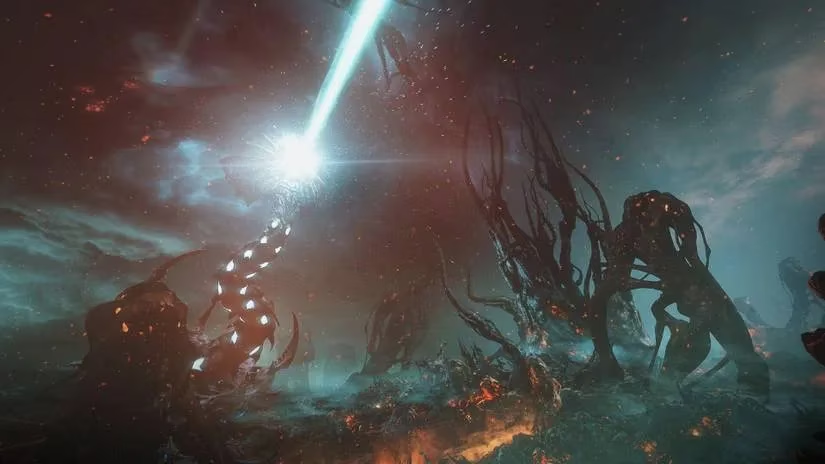
The conversation, as Carter described it, was a design backflip. Warframe had built its reputation on a massive reveal that waited after twenty to thirty hours of quests. That secret was sacred. Yet a new player who had just unboxed a PS5 did not want to hear that the real story began forty or fifty hours later. They wanted to know which beats mattered. They wanted to feel ready when the next chapter dropped. Digital Extremes began asking how to hand over that story information without spoiling the mystery or flattening the journey.
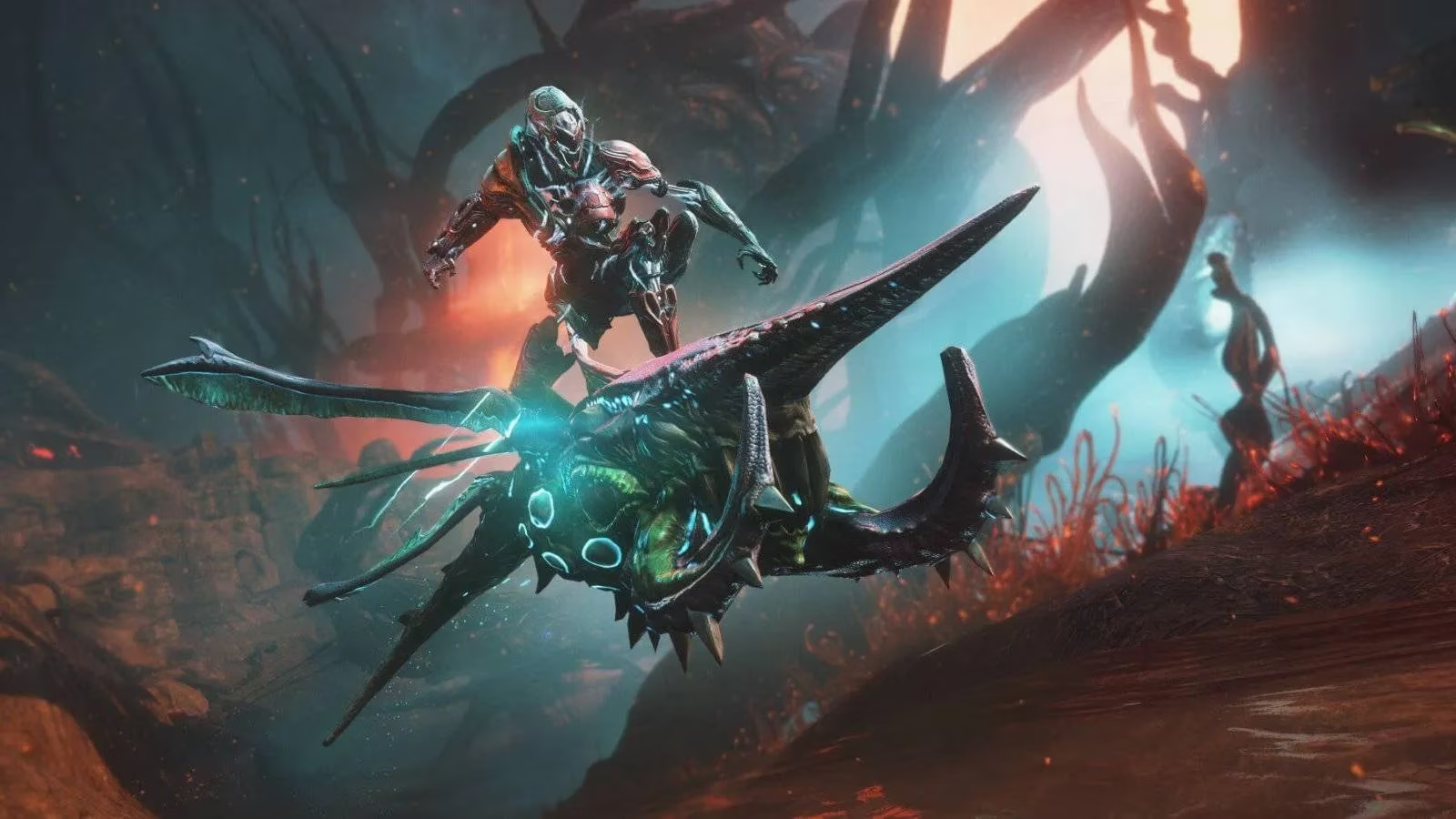
The Design Backflip
Carter's team framed the problem clearly. Big story reveals had to stay interesting and relevant. New players had to be able to try them without grinding through everything first. Those two goals pulled in opposite directions. One protected legacy. The other protected growth. The answer was not to remove the journey, but to make the core path legible. A new Tenno should understand the essential story beats. They should not need a wiki, a veteran friend, or a hundred hours of guesswork.
This was a departure for Warframe. For years, the game had treated its deepest lore as a reward for patience. The Second Dream and The War Within became famous because they changed what players thought Warframe was. That power came from delay. But delay could also become a wall. If every new expansion sat behind that wall, the wall grew taller with every update. Eventually, only veterans would see the future.
| Aspect | Earlier Warframe | Carter's 2020 Vision | 2026 Reality |
|---|---|---|---|
| Open worlds | Accessible, but sometimes overwhelming | Keep them welcoming to low Mastery Rank | Still a key onboarding space |
| Railjack | Required heavy progression | Find ways to let newcomers participate | Refined, but still a deep system |
| Story quests | Huge reveals after 20-30 hours | Clarify core beats without spoilers | Streamlined paths and recaps |
| Platform updates | Staggered or delayed | Aim for simultaneous releases | Cross-platform updates are expected |
From Deimos to the Modern Era
The years after that call tested the philosophy. The New War arrived with cinematic ambition, and it asked players to bring Railjack and Necramech readiness. That requirement reminded everyone how fragile the doorway could be. Duviri offered a stranger, more modular entry point. Whispers in the Walls and Warframe 1999 pushed the lore forward while experimenting with accessibility. By 2026, Digital Extremes had not solved every tension, but the direction was clear. New content should not feel like a locked room. It should feel like a station with many doors, some wide open and some waiting for the right key.
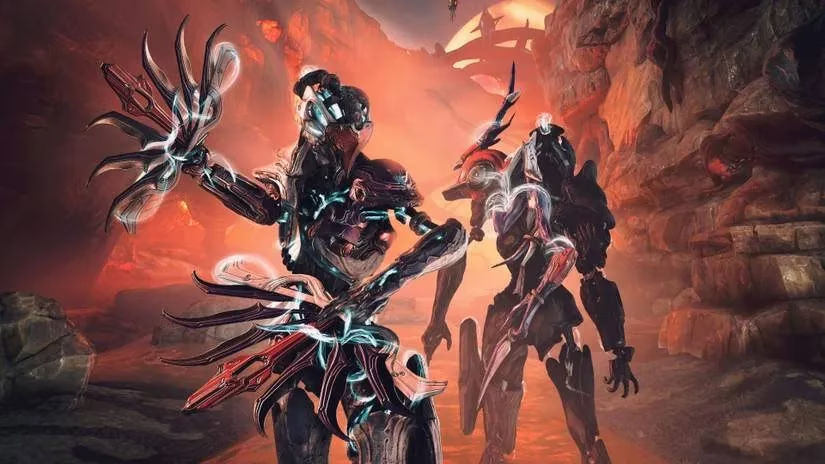
Xaku, the community-built Warframe that arrived with Heart of Deimos, became a symbol of that era. It was strange, flexible, and unafraid to break rules. The same spirit applied to onboarding. Digital Extremes began treating the new player experience as live content, not a one-time tutorial. They added clearer junctions, better quest guidance, and more ways to understand the star chart. They also embraced cross-platform play and cross-save, which turned the old dream of simultaneous updates into a practical expectation. A Tenno could start on one device, continue on another, and still meet the same story.
Why the Lesson Mattered
MMOs live and die by their doorways. A veteran will tolerate complexity because they remember the path. A newcomer sees only the locked gate. Carter's warning was simple: if you want a growing playerbase, you cannot keep new and exciting content away from new players. Many MMOs learned that lesson too late. Warframe, with its decade-long history, had to learn it while running.
The solution was never a single patch. It was a posture. Every expansion now had to answer two questions. Does this reward the veterans who built the world? Does this invite the newcomer who just arrived? If the answer was only yes to the first, the update risked becoming a museum. If the answer was only yes to the second, it risked losing the depth that made Warframe special.
By 2026, that balance remains the studio's hardest backflip. The story is still mysterious. The grind is still real. But the core beats are easier to find, and the newest chapters are less likely to hide behind a mountain of old ones. Carter's call with the creative director and lead designer did not produce a magic fix. It produced a compass. For Warframe, that compass still points toward the same idea: let every Tenno, old or new, feel like the next chapter was written for them. 🚀
Loading comments...