I have spent hundreds of hours bouncing between Destiny 2 and Warframe, and every time I think one has the better universe, the other pulls me back with a new quest, a hidden cinematic, or a codex entry that reshapes what I thought I knew. Both games deliver stylish science fiction, but their approaches to lore could not feel more different. Destiny 2 leans into a familiar post-apocalyptic struggle between Light and Darkness, while Warframe buries its history under layers of alien myth and faction propaganda. So which one actually satisfies a lore-hungry player like me?
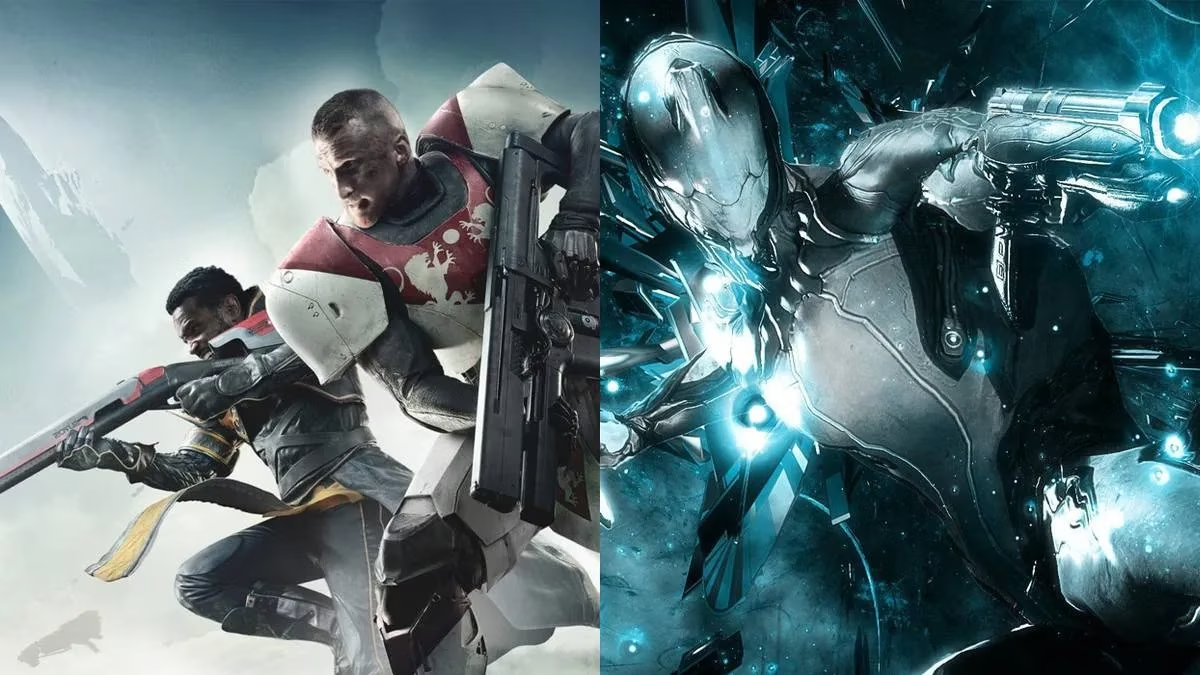
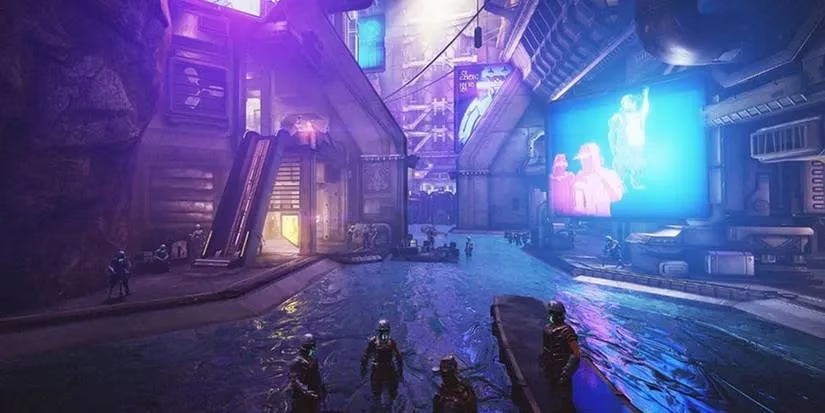
When I first woke up as a Warframe-wearing Tenno, I had no idea what was happening. The militaristic Grineer wanted me dead, the industrialized Corpus treated me as a threat, and the Lotus was the only voice I could trust. That disorientation is not a flaw; it is the point. Warframe drops me into a space dystopia where most NPCs are hostile, neutral, or deeply suspicious. I can be a heroic Tenno, join a Syndicate for personal gain, or stay a lone third party. The story does not hand me a clean mission briefing; it asks me to dig through data logs, rumors, and propaganda.
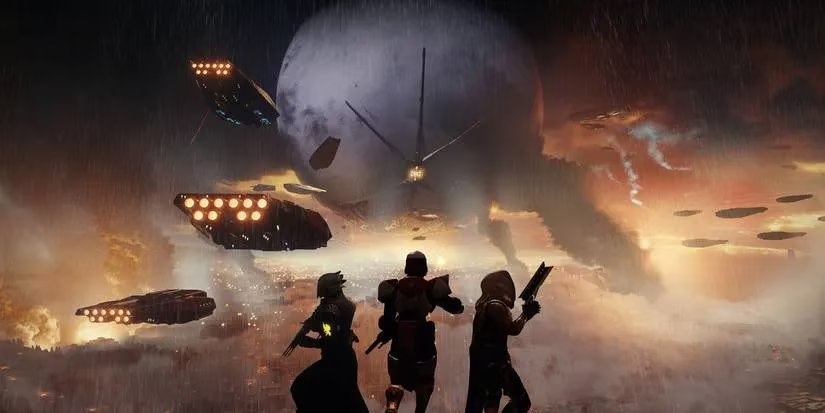
In contrast, Destiny 2 begins with action. The Cabal leader Ghaul arrives on Earth, seizes the Traveler’s Light, and forces the Guardians to fight without their powers. My Guardian discovers a shard of the Traveler, regains part of the Light, and takes the fight to Ghaul. That straightforward heroism makes me feel like an active participant in history. The setting is a post-apocalyptic Earth with only the Last City remaining, and humanity clings to a renewed sense of purpose thanks to the Traveler. There is still tactical gear and “ancient” weapons beneath the knightly armor, which highlights humanity’s struggle to cope with the Collapse.
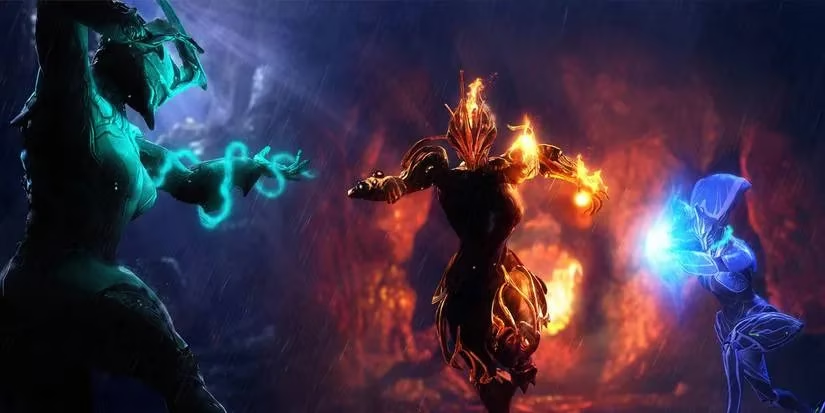
The biggest difference for me is how each game treats history and mystery. Warframe feels mythological by nature. My Tenno cannot remember the events that led to the game’s opening, and the Orokin Empire’s true origin is lost in time. The Grineer are a genetically produced servant race, the Corpus grew from a humble farmer into a financial empire, and the Orokin might be a futuristic version of humanity—but that remains a theory. Are they truly human? The game never fully confirms it, and that ambiguity makes Warframe’s lore feel alien.
Destiny 2, meanwhile, puts the fate of humanity at stake in a much more direct way. The Darkness has annihilated or enslaved various alien races, and the Hive, Fallen, Taken, and Vex all threaten the Solar System. Humanity also produced the Awoken and the Exo, and Guardians can be Humans, Awoken, or Exo chosen by Ghosts. I always know what I am fighting for: the Last City and the Light. That clarity makes Destiny 2 easier to follow, but it also means the game relies on familiar sci-fi heroism rather than deep archaeological uncertainty.
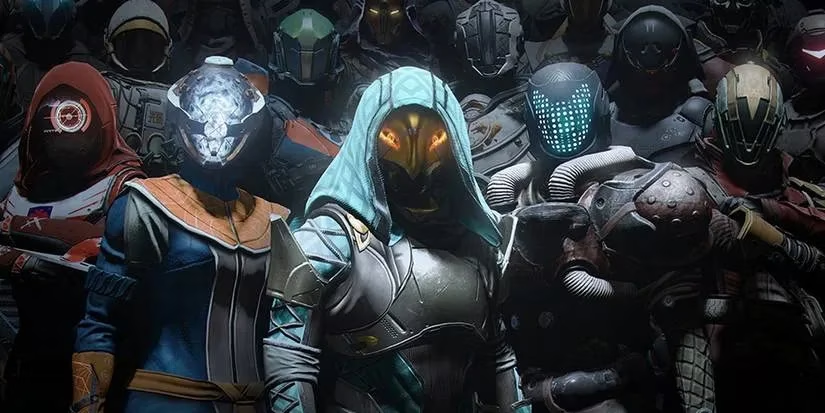
Factions add another layer. In Warframe, Syndicates such as the Arbiters of Hexis, Cephalon Suda, and the Perrin Sequence oppose each other. If I anger a Syndicate enough, it may send assassins after me during missions. That consequence makes the world feel politically alive. Destiny 2 has its own factions and foundries. The Cryptarchs decode lost cultures, the Vanguard protect Earth, and weapons manufacturers like Omolon and Hakke reveal a functioning corporate atmosphere even after the apocalypse. It is a small detail, but it makes the Last City feel like a living economy.
| Aspect | Warframe | Destiny 2 |
|---|---|---|
| Tone | Alien dystopia, espionage thriller | Post-apocalyptic heroism |
| Protagonist | Amnesiac Tenno | Guardian of the Last City |
| Main enemies | Grineer, Corpus, Orokin remnants | Darkness, Hive, Fallen, Taken, Vex |
| Story method | Player-driven excavation | Linear, active history |
| Faction impact | Syndicate assassins and rivalries | Foundries and Vanguard reputation |
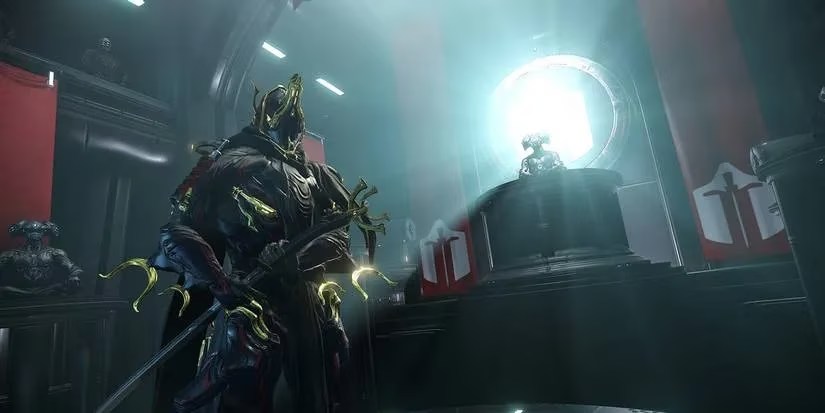
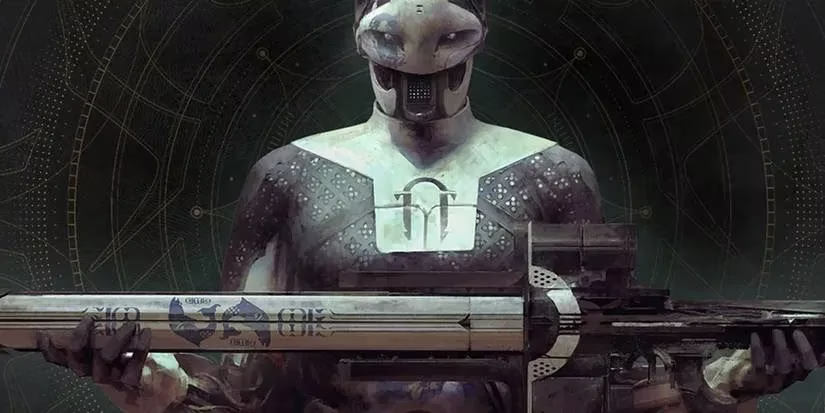
One area where Warframe stands out is how it turns story into a game mechanic. I start on Earth and unlock planet after planet, but some planets remain locked until I complete Story Missions. Those missions reward me with Companions, Archwings, and other endgame tools while my Tenno slowly pieces together the past. It feels less like reading a lore codex and more like conducting espionage for the enigmatic Lotus. Destiny 2’s story is more linear and replayable, but it rarely blocks progression in the same way.
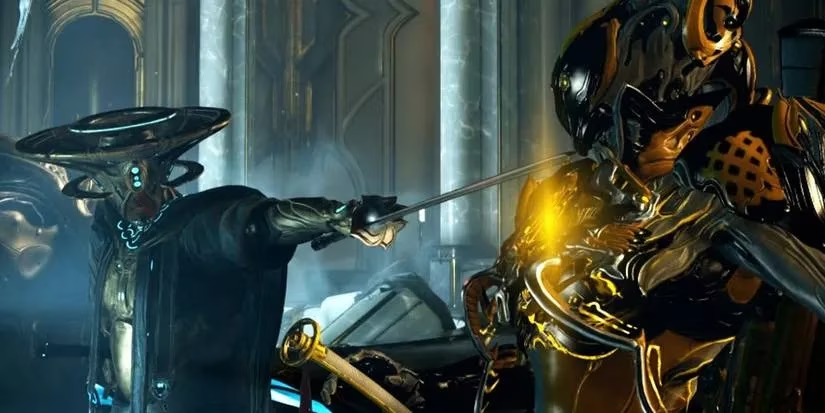
So which one dominates in lore? That depends on what I want. If I want a clear, heroic narrative where I defend humanity against Darkness, Destiny 2 satisfies that itch. If I want an elusive, player-driven excavation of a strange future, Warframe is unmatched. Is that not the real difference between myth and chronicle? In 2026, both games continue to expand, but these core identities remain the reason I keep returning to each one.
Loading comments...